Journal
Louvre Heist Exposes Security Vulnerabilities in Historic Buildings
The theft of crown jewels from Pariss Louvre Museum has shocked the world, highlighting serious security flaws at this renowned cultural institution.
For the Louvre, which attracts nearly ten million visitors annually, this heist represents a major security failure. Thieves struck during opening hours when staff were overwhelmed managing incoming crowds. They positioned a lift outside the Apollo Gallery and smashed through the windows to enter. The method was remarkably simple. The Louvres architectural history spans multiple periods, from a 12th-century medieval castle to todays complex. The current structure includes three main phases: medieval foundations, 16th-17th century Renaissance palace sections, and 19th-century additions. Photo credit: Riffat Muntaz on Unsplash
The targeted Apollo Gallery sits in the south wing, built in 1661 as a prime example of Louis XIV-era Baroque architecture. The gallery measures 60 meters long by 12 meters wide, with 6.5-meter-high ceilings. Seven floor-to-ceiling windows face the Seine River, each measuring 4.2 meters high by 2.1 meters wide. These windows were designed to flood the space with natural light for displaying royal collections. Centuries later, they provided easy access for thieves.
The Cour Carrée represents the Louvres oldest section, with buildings forming an enclosed courtyard layout. The east wings colonnade, built in the 17th century, rises three stories and contains over 200 rooms connected by corridors stretching more than 400 meters. Irregular room layouts and numerous corners make comprehensive camera coverage difficult.
The Denon Wing houses the Mona Lisa and other masterpieces across 26,000 square meters. Parts of this wing retain original 17th-century features, including stone walls 1.5 meters thick and complex beam-and-column systems. These structural elements create visual blind spots that complicate modern surveillance installation.
 Photo credit: DAT VO on Unsplash
Government audit reports reveal that one-third of Denon Wing galleries lack CCTV coverage, while 75% of the Richelieu Wing operates without video surveillance.
As a UNESCO World Heritage site, the Louvre requires approval from heritage protection committees for any modifications. Installing equipment in historic walls needs assessment from architectural historians and preservation experts. Window reinforcement or replacement must use materials matching original specifications without altering appearance.
The palaces limestone walls and oak beam structures limit modern cable installation. Some galleries 18th-century wooden floors cannot support heavy monitoring equipment. Security upgrade projects often face delays due to conflicts between technical requirements and heritage protection standards.
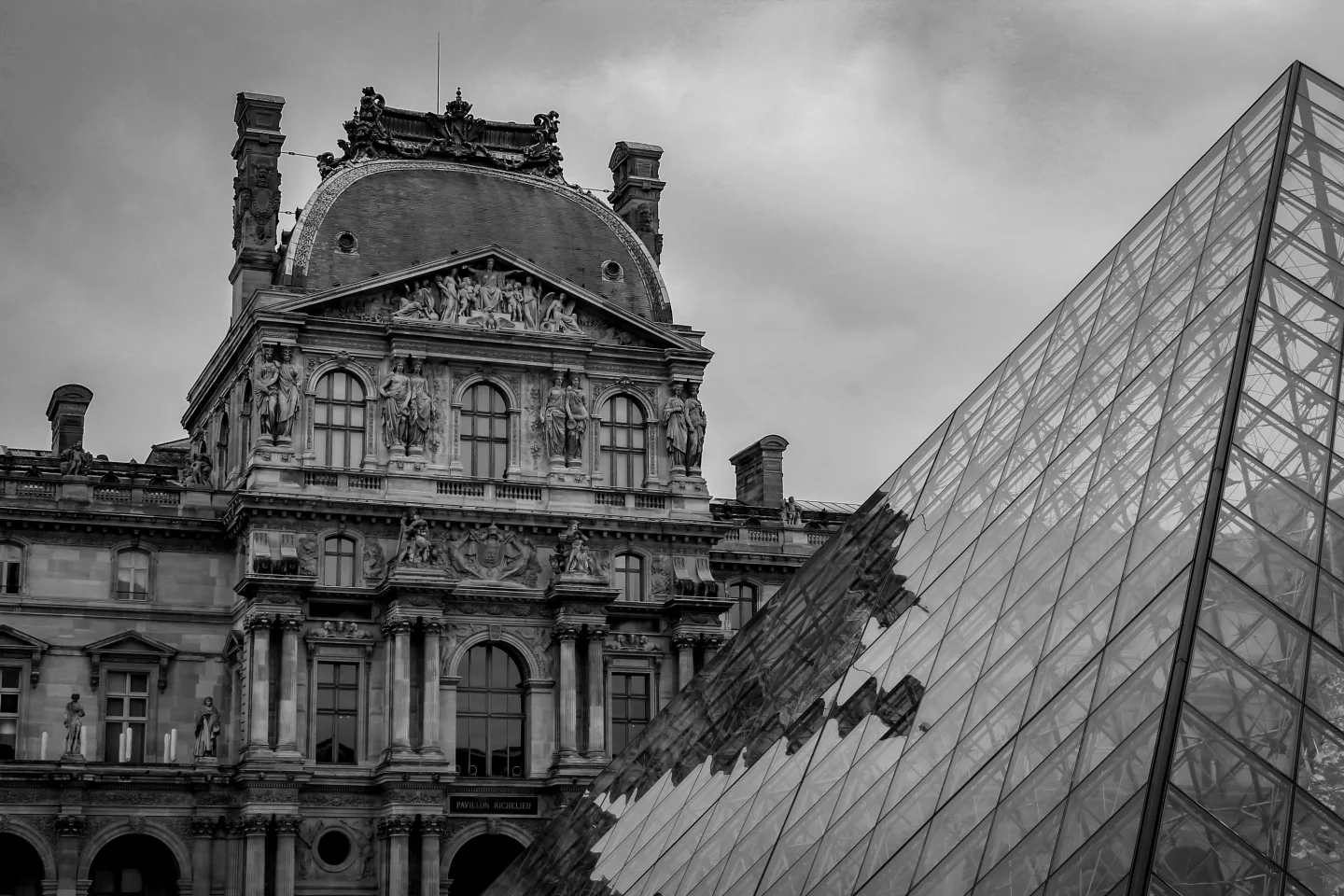
The buildings complexity increases security costs. The three main wings (Denon, Richelieu, Sully) cover 60,000 square meters total, requiring different security strategies. The underground shopping area and I.M. Peis glass pyramid entrance add monitoring complications.
The Louvre isnt new to theft. In 1911, employee Vincenzo Peruggia walked out with the Mona Lisa and kept it hidden for two years. Thieves made off with millions of euros worth of Egyptian artifacts from the Denon Wing in 1998. Four armed robbers hit the administrative offices in 2007, grabbing cash and small artworks. These cases show how hard it is to secure such a massive complex.