Journal
Inside Stuttgart's New Main Station, Which Will Cost Some €14.5 Billion to Build
A luminous new underground station gives Stuttgart back its ground plane – even as delays and rising costs keep S21 in the public eye.
For over a century, Stuttgart’s rail lines carved a hard edge through the city, separating neighbourhoods and pinning the historic terminus to a sea of tracks. Stuttgart Main Station (S21), the centrepiece of the Stuttgart 21 rail and urban development project, rewrites that story by moving the trains underground and giving the city back an uninterrupted surface of streets, squares and parkland. The result is a rare urban reset: infrastructure dissolves from view, and in its place, a new ground plane emerges for everyday life.
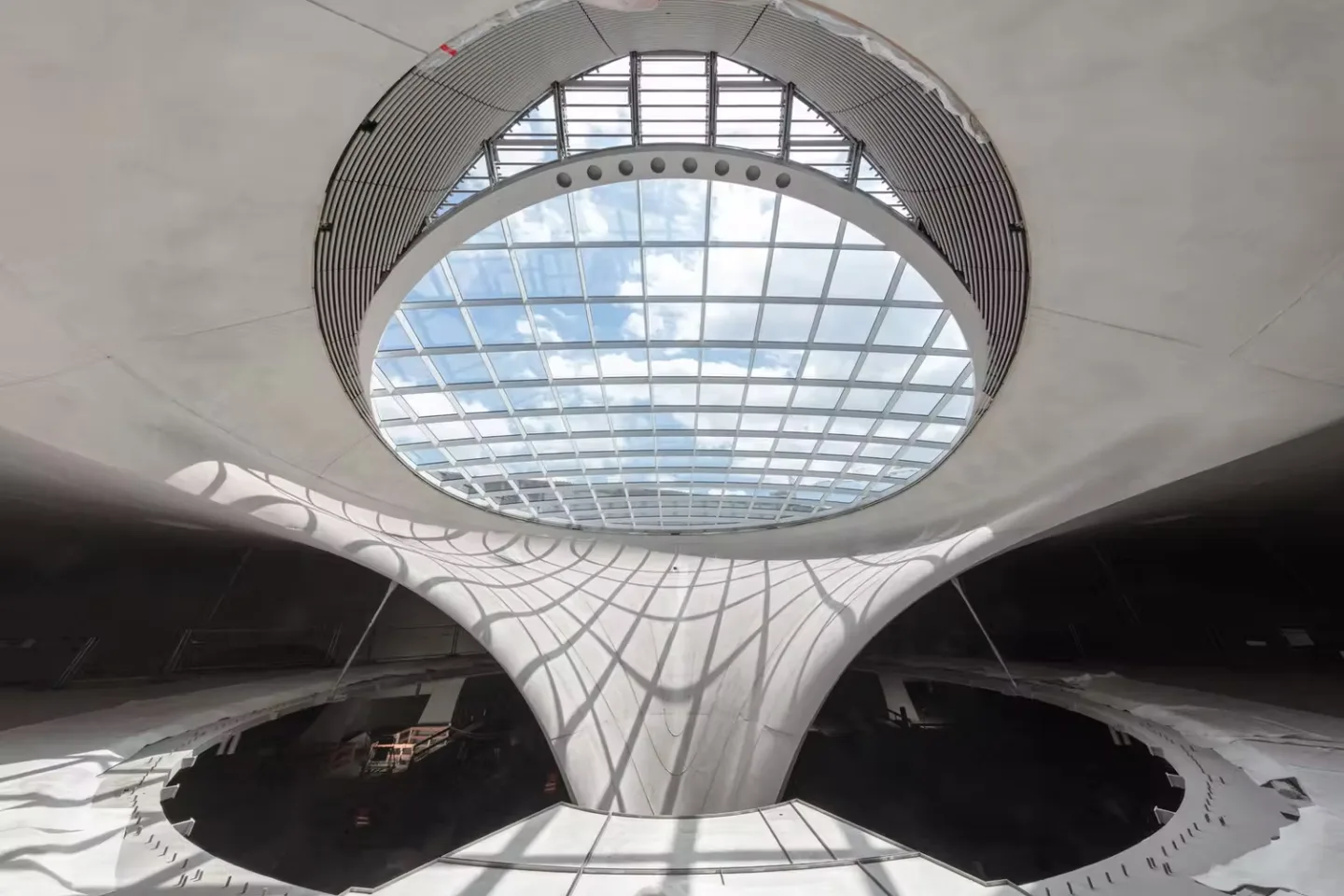
 Designed by Christoph Ingenhoven and his Düsseldorf-based studio, ingenhoven associates, the future central station is a low-lying, eight-track through station tucked just beneath the city centre. Instead of a conventional subterranean box, the hall is defined by a sculptural concrete roof carried on 28 chalice-shaped supports, each crowned by a glazed opening that funnells daylight down to the platforms while reading at street level as a gentle dome in the landscape. Architecture, structure and light are fused into one expressive system that aims to make high-speed mobility feel as open and legible as a city square.

At street level, this roofscape becomes part of a new urban topography. Former rail land is reimagined as plazas, promenades and extensions of the Schlossgarten park, knitting together districts that were long divided by tracks. Daily routines – walking to work, cycling across town, meeting friends – now cross the station site as naturally as they pass through the city’s historic squares, with the restored Bonatz building anchoring one edge of a civic ensemble that feels more like a public living room than a piece of transport hardware.

Yet the project is not without its hurdles. Stuttgart 21 has become one of Europe’s most controversial rail megaprojects, facing repeated postponements, sharply rising costs and intense public debate over heritage and environmental impact. Protest movements and critical campaigns have turned its construction fences into a stage for civic discourse, ensuring that every milestone on site is mirrored by scrutiny in the public realm.

Travellers will find a bright, easily read hall and quicker links across the region; residents gain something rarer — a swathe of reclaimed city-centre land and a softer, more walkable urban grain. Beneath Stuttgart, mobility, landscape and architecture settle into a single gesture, handing the city back a surface on which to picture its everyday future — even if budgets and politics are still being tested along the way.